Pearson Edexcel · A-Level · Economics B
Course version: 9EB0 · Version from Sept 2015
Arguments for and against regulation: b) The costs of regulation
Full specification wording
Arguments for and against regulation: b) The costs of regulation
Regulation involves government intervention to correct market failure, but it incurs significant costs.
Checked against the Pearson Edexcel 9EB0 specification (opens in a new tab) on .
- 3 key terms
Study notes
From the checked teaching notes for this specification point.
The idea
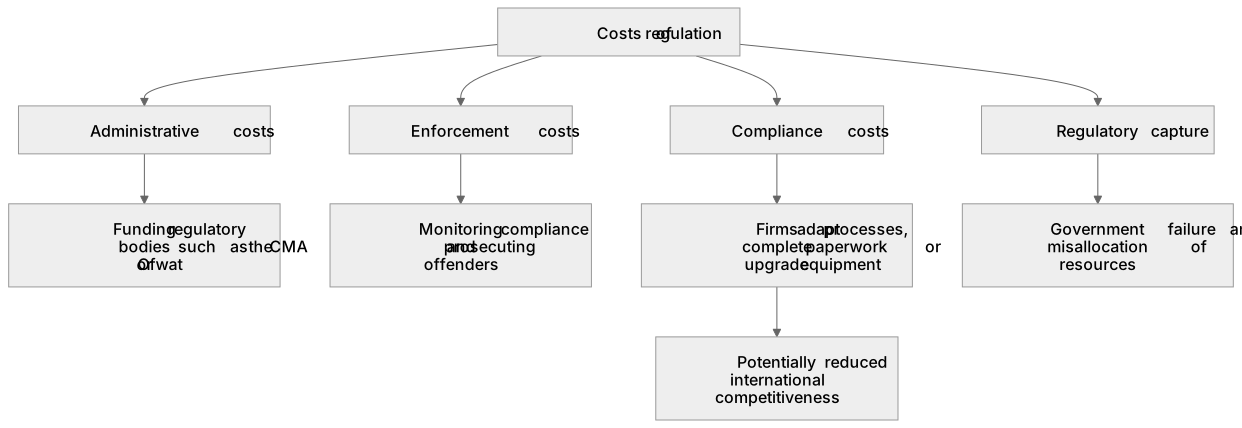
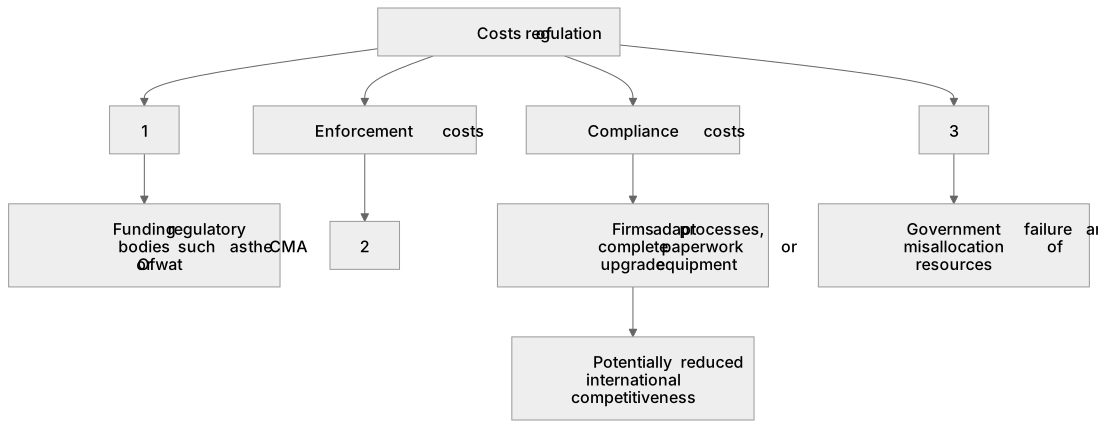
Regulation involves government intervention to correct market failure, but it incurs significant costs. Administrative costs arise from setting up and running regulatory bodies, such as the CMA or Ofwat, which require funding for staff and research. Enforcement costs occur when monitoring compliance and prosecuting offenders. Compliance costs fall on businesses, which must adapt processes, complete paperwork, or upgrade equipment to meet standards, potentially reducing their international competitiveness. Furthermore, regulatory capture can occur, where regulators act in the interest of the firms they oversee, leading to government failure and misallocation of resources.
What earns the marks
- Identify administrative costs of funding regulatory agencies, including salaries and research expenses.
- Recognise enforcement costs associated with monitoring markets and prosecuting non-compliance.
- Explain compliance costs for firms, such as installing new technology or managing administrative burdens.
- Evaluate how high regulatory costs can lead to government failure if they exceed the benefits of intervention.
Common mistakes and how to put them right
Confusing compliance costs with administrative costs.
Put it right: Compliance costs are borne by the firms being regulated, whereas administrative costs are borne by the government or regulatory body.
Assuming regulation always improves market outcomes.
Put it right: Acknowledge that the costs of regulation can outweigh the benefits, resulting in government failure.
Ignoring the impact of regulation on international competitiveness.
Put it right: Recognise that strict domestic regulations can increase costs for local firms, making them less competitive globally.
Exam tips
- Use specific examples of regulatory bodies, such as Ofgem or the CMA, when discussing administrative costs.
- Always weigh the costs of regulation against the intended benefits to evaluate the likelihood of government failure.
- Consider the unintended consequences of regulation, such as regulatory capture or the growth of shadow markets.
Try the lesson
The start of the Arguments for and against regulation: b) The costs of regulation lesson, made from checked teaching notes for this specification point.
Have a go first
Which of the following best describes the 'administrative costs' associated with business regulation?
Listen
Regulation involves government intervention to correct market failure, but it incurs significant costs. Administrative costs arise from setting up and running regulatory bodies, such as the CMA or Ofwat, which require funding for staff and research. Enforcement costs occur when monitoring compliance and prosecuting offenders. Compliance costs fall on businesses, which must adapt processes, complete paperwork, or upgrade equipment to meet standards, potentially reducing their international competitiveness. Furthermore, regulatory capture can occur, where regulators act in the interest of the firms they oversee, leading to government failure and misallocation of resources. A strong answer earns marks for these points. Identify administrative costs of funding regulatory agencies, including salaries and research expenses. Recognise enforcement costs associated with monitoring markets and prosecuting non-compliance. Explain compliance costs for firms, such as installing new technology or managing administrative burdens. Evaluate how high regulatory costs can lead to government failure if they exceed the benefits of intervention. A common slip: Confusing compliance costs with administrative costs. Instead, compliance costs are borne by the firms being regulated, whereas administrative costs are borne by the government or regulatory body. Exam tip: Use specific examples of regulatory bodies, such as Ofgem or the CMA, when discussing administrative costs.
See it
Key words
Say what each word means before you turn the card.
Government failure
Try answering aloud or in your head before turning the card.
Market intervention
Try answering aloud or in your head before turning the card.
Regulatory capture
Try answering aloud or in your head before turning the card.
See every definition
- Government failure
- A situation where the costs of regulation can outweigh the benefits, or regulators act in the interest of the firms they oversee, leading to misallocation of resources.
- Market intervention
- Government action to correct market failure, which incurs significant costs such as administrative, enforcement and compliance costs.
- Regulatory capture
- A situation where regulators act in the interest of the firms they oversee, leading to government failure and misallocation of resources.
Label the diagram
Some boxes have lost their names. Pick the right name for each number.
1Box 1
2Box 2
3Box 3
There is more to this lesson
The full lesson goes on to check your understanding and help you earn the marks. Create a free account to carry on, with your progress saved.
A week of Premium from your first lesson · Then the free plan continues · No card, no charge
Test your understanding of Arguments for and against regulation: b) The costs of regulation
Active recall beats re-reading. Take an instant quiz now to test what you’ve learned and lock it into long-term memory.
A week of Premium from your first lesson · Then the free plan continues · No card, no charge